


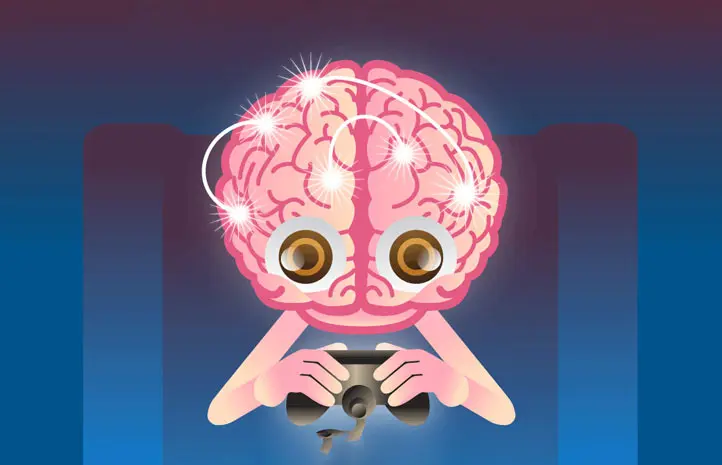
The Indian Government has taken a stern stance on online gaming and has moved to ban three types of games that involve betting, can be harmful to the user and involve the factor of addiction. The growing seriousness of the government is due to many incidents that have occurred in recent times, such as children getting addicted to online games, becoming aggressive and taking extreme steps. Online games like PUBG, Garena Free Fire, Ludo King and many others are very popular among Indian children. These games have features to hook children for hours on their platforms. They also offer features such as playing in teams with people from the world over, audio chatting, messaging and sending stickers. These features of the games allow children to be in contact with strangers from across the world and often act as a hotspot where children fall prey to cyber criminals. Apart from these challenges of online gaming, there is a major challenge that is a matter of concern for every parent and caregiver: the impact of online gaming on children's minds. There exist two divergent views on the impact of online gaming: one, that it increases concentration, memory, alertness and builds skills and the other view includes that online games have a harmful impact on children's minds and cause major psychological transformation. Online gaming has often been associated with the increasing cases of mental health issues among children.

Is Online Gaming Compulsive by Nature?
Online games are addictive in nature if played beyond a certain limit and there is no doubt about it, as many studies validated this fact. According to Limelight Networks Inc, in 2021, it was revealed that Indian gamers spent more than 8 hours and 36 minutes each week. Binge gaming is a new norm. Why is this so? Online games are deliberately designed to be addictive in nature. Every feature of an online gaming platform is crafted to engage the gamer emotionally and to attract attention. Features such as color, lights, goals of the game, instructions, rewards and tasks are carefully designed and created by cognitive psychologists employed by these online gaming companies.
Intermittent Reinforcement is another feature and is perhaps the most important one. It is a psychological principle that is employed by gaming companies to compel people to stay on their platforms and prevent them from getting bored. It rewards certain behaviour like accomplishing tasks in the game and an often unpredictable and random reward system is employed, which increases gamers' motivation, engagement and excitement. It is positive for platforms as it maintains the excitement, but harmful as it is a major contributor to compulsive and addictive behaviour in individuals.
Can Online Gaming Be Equated to Drug Like Feeling?
Dopamine is a neurotransmitter in the brain's reward system. Dopamine is released when a person expects a reward from a certain action and the brain starts releasing dopamine when that action is performed, giving the sense of pleasure. It helps us to focus, learn, stay motivated and find things interesting. However, many mental health-related disorders can be linked to too much or too little release of dopamine. For example, drug abuse and addiction cause a swift increase in dopamine in the brain and the reward system. And repeated drug abuse raises the threshold of this kind of pleasure, which means to get the same high level of pleasure individual needs to take a larger amount of the drug.
In a similar fashion, binge gaming online releases a huge amount of dopamine. As dopamine is released in the nucleus accumbens region of the brain (part of the brain's pleasure and reward system. It activates our motivation and allows willpower to translate into action. But the brain gets used to this release and becomes less sensitive to receiving dopamine signals. The brain adapts to the constant release of dopamine, and eventually, the gamer starts playing more to achieve the same level of pleasure. After some time, nothing feels exciting and fun. The impact of online gaming is different in different individuals based on their gaming patterns and time.
Are Violent Games Making Children Aggressive?
A study titled 'Is it painful? Playing violent video games affects brain responses to painful pictures: An event-related potential study observed that habitual and short-term exposure to violent video games may decrease players’ brain responses to painful pictures. We found that frequent players of violent video games were less sensitive to painful pictures before playing a violent game in the lab, whereas participants without violent video gaming habits became less sensitive to painful pictures after 40 minutes of violent game play.
Many online games are full of adventure, excitement, violence and bloodshed, which leads to the production of adrenaline to tackle danger while playing online games. for example, the danger of being shot. When excess adrenaline is released, the heart pumps blood harder than it normally does, eventually increasing blood pressure, heart rate and breathing rate.
It also releases cortisol, a stress hormone, released when an individual sees threats. If the stress hormone is constantly active due to excessive gaming, it stops the working of serotonin, a neurotransmitter. It affects the mood, causing depression, blood sugar issues, eating disorders and disturbs the sleep cycle.
WHO classified Gaming as a Disorder
The World Health Organization has included Internet Gaming Disorder in the 11th Revision of the International Classification of Diseases (ICD-11)(2), defined as “a pattern of gaming behavior ('digital-gaming' or 'video-gaming') characterized by impaired control over gaming, increasing priority given to gaming over other activities to the extent that gaming takes precedence over other interests and daily activities, and continuation or escalation of gaming despite the occurrence of negative consequences.”
Strike a Balance
Children and adolescents are more often engaged in playing online games, which are good if played for a limited time, as it helps in boosting memory, attention, problem-solving skills and enhance learning. However, as it is rightly said, 'Excess of Everything is Bad', binge gaming will negatively impact the brain of a child. The age is the most crucial period of life, which shapes the rest of their life; the way brain connections are framed at this age will remain with them for their entire life. All this will influence their attitude, behaviour, actions and personality.
It is necessary to balance online gaming with other rewards or pleasure-giving activities, like playing outdoor games and other hobbies and interests. Online gaming not only affects brain development if played for long durations but also causes many physical problems like back and neck pain, computer vision syndrome(due to excessive screen time), which causes pain and redness in eyes, headache and obesity.
So, children at the very early stages need to be educated by teachers and parents about the harmful effects of online gaming if played excessively, as this will prevent them from getting into the web of problematic and compulsive gaming. Prevention is better than cure.
For Further Readings:
- Game developers use intermittent reinforcement | reSTART® | (800) 682-6934 (netaddictionrecovery.com)
- Pleasure centre: how video games affect young brains (theconversation.com)
- Stages of Video Game Addiction: How Bad Can it Get? | Healthy Gamer
- Miedzobrodzka, E., van Hooff, J. C., Konijn, E. A., & Krabbendam, L. (2022). Is it painful? Playing violent video games affects brain responses to painful pictures: An event-related potential study. Psychology of Popular Media, 11(1), 13–23. https://doi.org/10.1037/ppm0000290
- What Impact Do Video Games Have On the Brain? — BrainPost | Easy-to-read summaries of the latest neuroscience publications